
I love trying herbal teas, like burdock root tea, that don’t appear in the typical chain grocery store in the U.S. That’s partly because for years I thought I didn’t enjoy herbal tea. It turns out, I’m just not a big fan of mint or chamomile–probably the two most popular herbals in the United States.
So, when one of my favorite tea companies, Soocha Tea, added a new herbal tea to their collection, I knew I had to try. Maybe it would be a new option to add to my Herbal Tea Recommendations!
Tempted to Try
Burdock root tea wasn’t familiar to me. It’s more common in cooking and as a tisane in East Asian cultures. Interestingly enough, I also read that some Native Americans also used burdock root. Given my excellent experience with the other herbals I’ve tried from Soocha Tea, I was eager to try.
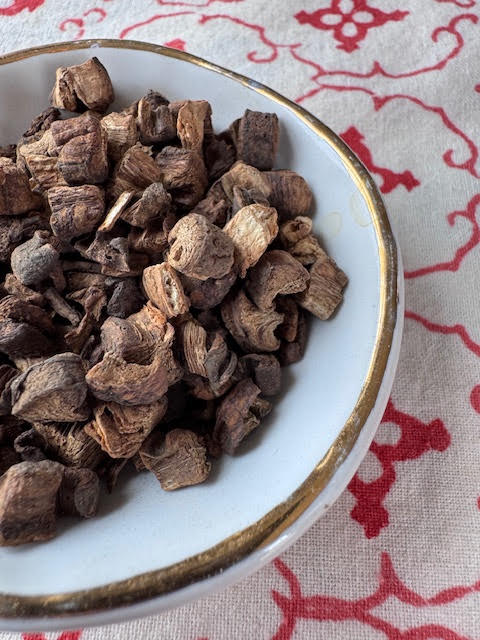
The first thing I noticed about the tea was how the dried root looks like chipped wood. Next, I was surprised how little burdock root it took to create a very flavorful brew that could be steeped many times.
Steeping and Tasting Notes
How to Steep Burdock Root Tea
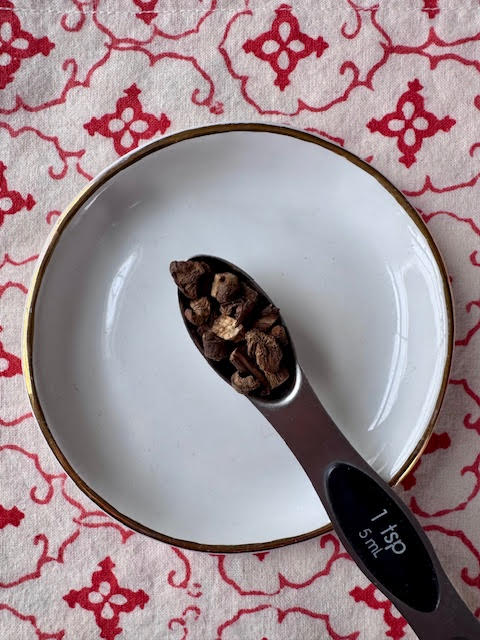
I followed the advice on Soocha Tea’s package to steep the burdock root tea, while figuring out how to convert the gram measurement so I wouldn’t have to break out my scale every time I’d like to enjoy this tisane.
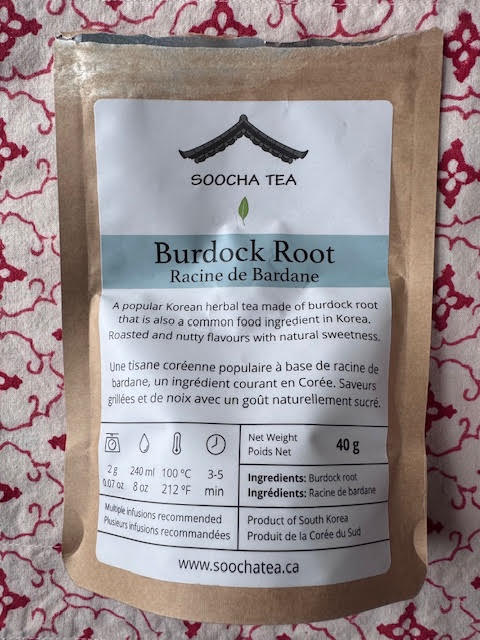
- Amount of dried burdock root: 2 grams (about 1 tsp of burdock root, gently shaken to fill efficiently)
- Quantity of water: 8 ounces (about 250 ml)
- Temperature: Boiling (212 F or 100 C)
- Steep time: 3-5 minutes
- Number of steeps: I enjoyed 3 and stopped because I had enough liquid (lol). But, Soocha Tea’s website says you can steep it more than 5 times, increasingly the length of each steep.
Tasting Notes for Burdock Root Tea
To me, burdock root tea has wonderful and nostalgic aromas and flavors. It reminds me of roasted peanuts and caramelized corn–taking me right back to my childhood and the special occasions when I was given a box of Cracker Jack.
Roasted sweet potato and a touch of hickory smoke round out the aroma and flavor notes for me. The notes rebalance over multiple steeps, but I could still find all of those flavors in the first three steeps.
It’s a lovely tisane that packs a lot of flavor over multiple infusions.
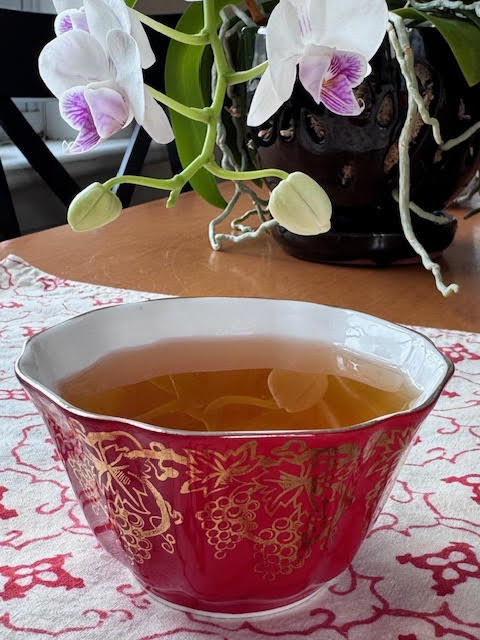
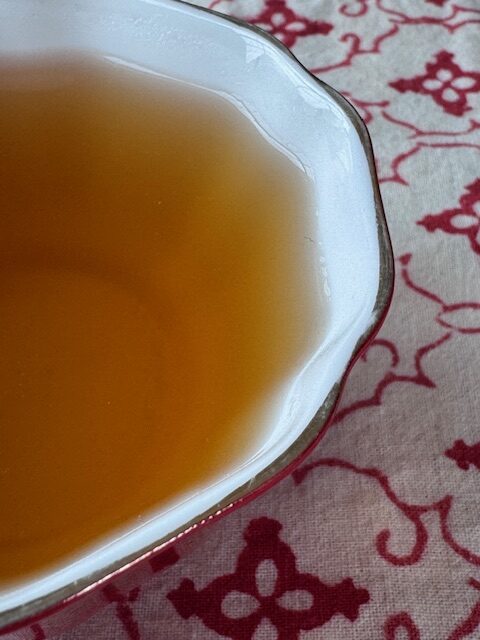
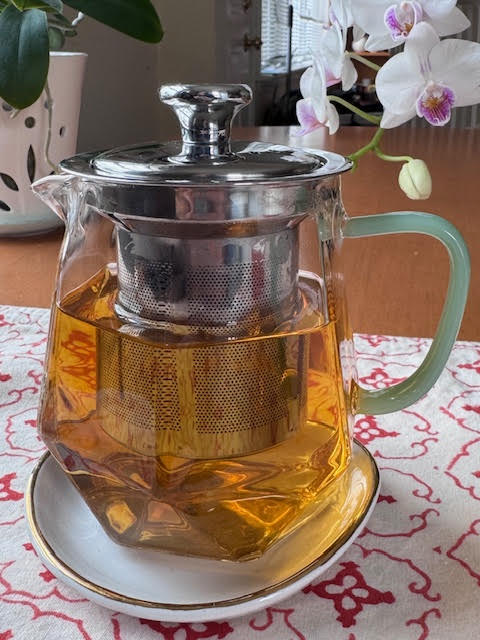
This root tea brews up a rich amber color–a color that reminds me of some black and darker oolong teas.
Potential Benefits and Warnings for Burdock Root
Any natural herb or root can have possible positive and negative impacts. So, let’s overview the potential pros and cons of burdock root tea. This research, of course, should not replace consulting your health care provider.
WebMD reports that burdock root has been studied for its potential to reduce chronic inflammation, slow or prevent some cancers, and help some skin conditions. Healthline also reports the root “may lower blood sugar levels.”
Healthline also notes that burdock root hasn’t been studied enough to know safe use in children. Thus, they counsel against giving it to children without consulting a pediatrician. They also caution that pregnant or nursing women shouldn’t use it without a doctor’s advice.
Additionally, people allergic to chrysanthemums or daisies, they point out, could “be at an increased risk of having an allergic reaction to burdock root and should avoid it.” Soocha Tea’s website expands this warning to people “allergic to the Asteraceae/Compositae family (ragweed, chrysanthemums, marigolds, daisies, and many others).”
Finally, burdock root is naturally a diuretic. So, WebMD and Healthline both urge avoiding it if you are dehydrated or taking diuretic medicines.
2 replies on “Burdock Root Tea”
Well done and informative!!
Thanks so much, Kim!